
Blog · Parkinson's
Boxing and Parkinson's Disease: A Coach's Guide to the Research
Emily Mizer explains what systematic reviews say about boxing exercise for Parkinson's disease—balance, mobility, quality of life, and where the evidence is still evolving.
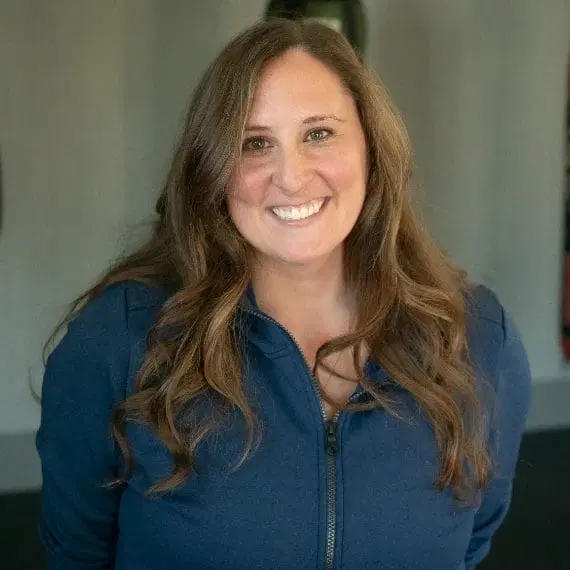
Emily Mizer
June 18, 2025 · Owner & Coach, Strong Martha

Members sometimes mention Rock Steady Boxing or ask whether our classes could help someone with Parkinson's disease. I always answer honestly: I'm not a physical therapist or neurologist, but the research on boxing-based exercise for PD is real, growing, and worth knowing about.
What the systematic reviews find
Multiple recent systematic reviews have examined boxing exercise in people with Parkinson's disease. A 2025 review in Frontiers in Aging Neuroscience analyzed 13 studies involving over 400 patients and found moderate-quality evidence that boxing is feasible, safe, and may improve lower-extremity strength, balance, mobility, gait, and quality of life.
Other reviews highlight similar benefits—especially for balance and quality of life—while noting that study designs and boxing protocols vary widely. A meta-analysis published in Reviews in Neurological Diseases reported more mixed results on motor symptoms, which is a reminder that “boxing” is not one standardized prescription.
Why boxing-style training may help
- Forced pace and loud verbal cues can help overcome the bradykinesia (slowness) common in PD.
- Multi-directional footwork challenges balance in ways that walking alone may not.
- High-intensity intervals align with physical therapy guidelines for Parkinson's management.
- The community aspect supports adherence—often the hardest part of any exercise program.
A note of caution
If you or someone you love has Parkinson's, work with their neurologist and physical therapist before starting any new program. Non-contact, coach-supervised boxing may be appropriate for some people and not for others, depending on disease stage, fall risk, and individual goals.
At Strong Martha, we're happy to talk through what our classes involve and whether a private session or modified group approach makes sense. We don't claim to treat disease—we offer structured movement in a supportive environment.